
The Difference Between a Delay and a Supply Chain Disruption in the Philippines

Most businesses use both words to describe the same thing. They’re not.
A shipment arriving two days late is a delay. A typhoon shutting down your primary port for a week, your backup carrier having no available slots, and your documentation not ready for the alternative route? That’s a disruption.
Why this distinction matters is because a delay and a disruption require completely different responses. Treating a disruption like a delay is how small problems become expensive ones.
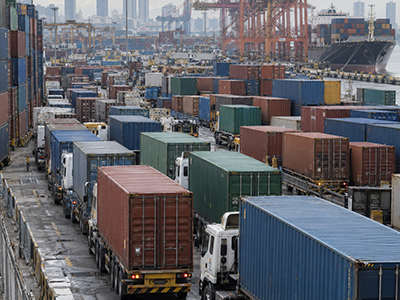
What a Delay Actually Is
A delay is a setback within a system that’s still working. The route is intact. The carrier is operating. The port is open. Something slowed down, such as a documentation review, a vessel running behind schedule, a truck that missed its window. But the path to resolution is clear.
Delays are manageable because the infrastructure around them is still functional. You can absorb them with buffer days, adjust delivery expectations, or rebook on the next available sailing. They cost time, sometimes money, but they don’t require you to rebuild your plan from scratch.
In the Philippines, the most common delay triggers are:
- Documentation errors that push a shipment into Yellow or Red Lane at customs
- Port congestion that adds days to an otherwise on-schedule vessel arrival
- Inter-island feeder connections missed because the main leg ran long
- Booking cut-offs missed by a narrow window
These are real costs. But they’re recoverable within the same logistics framework you already have.
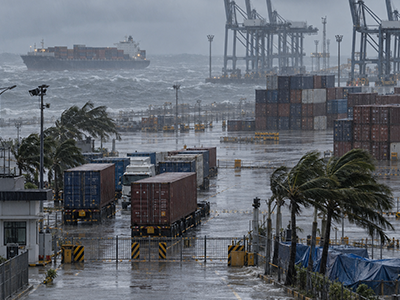
What a Disruption Actually Is
A disruption is something different. It doesn’t slow your shipment down, instead it stops the system your shipment depends on.
When a super typhoon suspends port operations, grounds flights, and floods key trucking corridors at the same time, the framework itself has broken down. There’s no “next sailing” to rebook on. There’s no alternate route that hasn’t also been affected. Your fallback options depend on contingency agreements you either have or don’t.
Supply chain disruptions in 2026 are increasingly driven by climate events, not just operational ones. In July 2026 alone, Typhoon Bavi generated a backlog of nearly two million TEU in container capacity across North Asia, with some vessels waiting over a week just to berth after ports reopened. That kind of event doesn’t resolve in a day because port backlogs from a major typhoon can take two to three weeks to clear.
For Philippine businesses, disruptions also arrive through routes that have nothing to do with local weather — geopolitical events affecting international shipping lanes, sudden tariff changes that force sourcing decisions to shift, or a critical carrier suspending operations on a key route. According to the Prologis 2026 Supply Chain Outlook Report, economic volatility, trade barriers, and geopolitical instability rank as the top three disruption concerns for logistics leaders this year.
A disruption asks a harder question than a delay does: not “how do we rebook?” but “does our contingency plan actually work?”
Why the Confusion Is Costly
When businesses treat every delay like a disruption, they overreact, spending on emergency air freight for shipments that just needed a two-day extension. When they treat every disruption like a delay, they underreact, waiting for a port to reopen when they should already be rerouting.
Both mistakes are expensive. And in the Philippines, where supply chains move across multiple islands, through concentrated port infrastructure, and through one of the world’s most active typhoon belts, the cost of misreading a situation compounds faster than in simpler markets.
The key question to ask when something goes wrong is: Is the system still working, or has the system itself failed?
If it’s the former, manage the delay. Rebook, adjust, communicate. If it’s the latter, activate the contingency. Alternative ports, backup carriers, modal shifts, pre-positioned inventory.
What Good Contingency Planning Looks Like
A disruption doesn’t become a crisis if the response was already planned. Here’s what that looks like in practice:
- Alternative routing – Know which ports can substitute for your primary entry point before you need them. For Manila-dependent cargo, Batangas or Subic are options. For Mindanao-bound freight, Cagayan de Oro and General Santos have different exposure to typhoon paths than Davao.
- Carrier backup agreements – A single carrier relationship is a single point of failure. During a disruption, everyone needs space at the same time. Pre-agreed backup carrier slots — even on a standby basis — give you options that aren’t available on the spot market.
- Modal shift triggers – Know in advance at what point it makes business sense to shift from ocean to air. For high-value or time-critical cargo, this threshold should be defined before typhoon season, not during it.
- Clean documentation, always – During a disruption, customs queues get longer and recovery windows get shorter. A documentation error that costs two days in normal conditions can cost five during a port backlog. Keeping your paperwork accurate and complete is a resilience strategy, not just a compliance one.
- Inventory closer to demand – For businesses serving markets outside Metro Manila, regional stock positioning means a disruption at your primary port doesn’t immediately become a stockout at your customer’s location.
The Bottom Line
Delays are normal. Disruptions in the Philippines are becoming more intense, even if not more frequent, as El Niño conditions push individual storms to higher intensity levels this season.
The businesses that handle both well are the ones that know which situation they’re in — and have a plan for each.
OTD helps Philippine businesses build logistics frameworks that account for both: reliable day-to-day operations and contingency plans that hold up when the system itself is under pressure. Talk to us about your supply chain setup →