The Difference Between a Delay and a Supply Chain Disruption in the Philippines

The Difference Between a Delay and a Supply Chain Disruption in the Philippines

The Difference Between a Delay and a Supply Chain Disruption in the Philippines

Most businesses use both words to describe the same thing. They’re not.

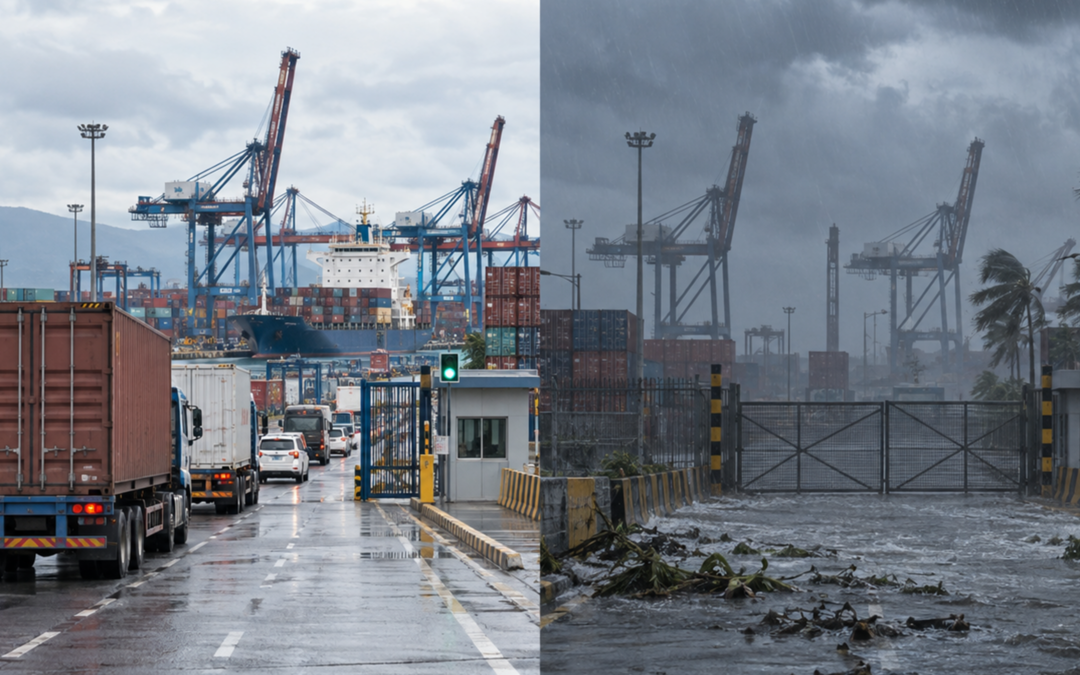
A shipment arriving two days late is a delay. A typhoon shutting down your primary port for a week, your backup carrier having no available slots, and your documentation not ready for the alternative route? That’s a disruption.

Why this distinction matters is because a delay and a disruption require completely different responses. Treating a disruption like a delay is how small problems become expensive ones.
On The Dot Logistics - Philippines

What a Delay Actually Is

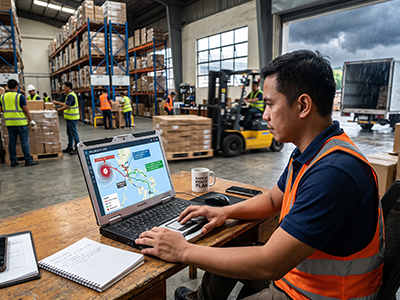
A delay is a setback within a system that’s still working. The route is intact. The carrier is operating. The port is open. Something slowed down, such as a documentation review, a vessel running behind schedule, a truck that missed its window. But the path to resolution is clear.

Delays are manageable because the infrastructure around them is still functional. You can absorb them with buffer days, adjust delivery expectations, or rebook on the next available sailing. They cost time, sometimes money, but they don’t require you to rebuild your plan from scratch.

In the Philippines, the most common delay triggers are:

  • Documentation errors that push a shipment into Yellow or Red Lane at customs
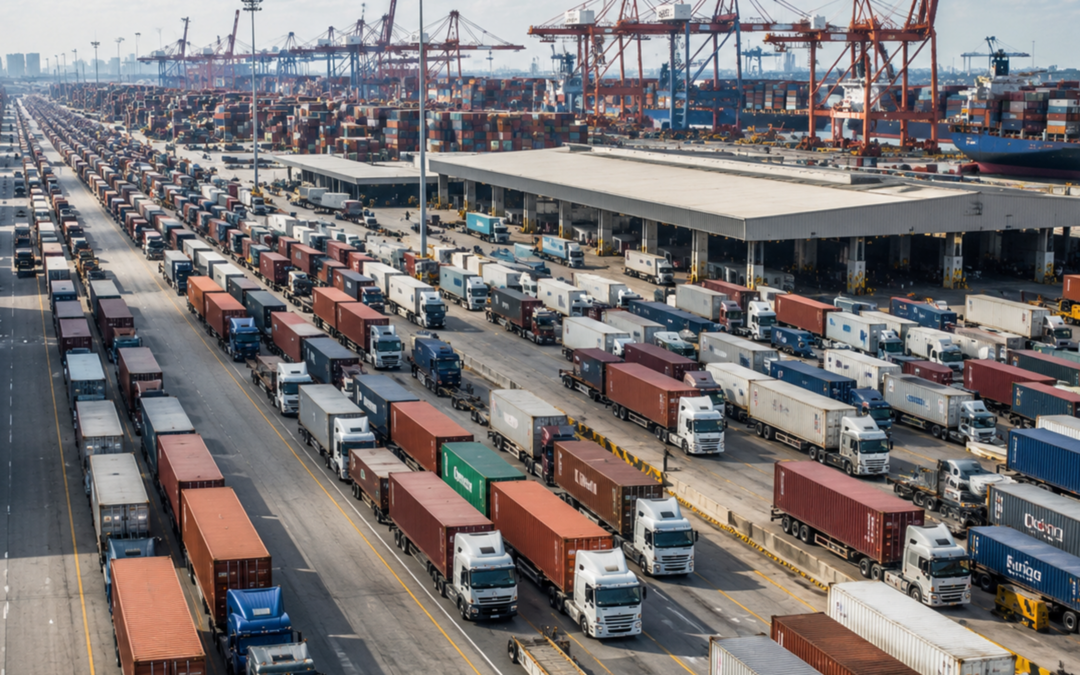
  • Port congestion that adds days to an otherwise on-schedule vessel arrival
  • Inter-island feeder connections missed because the main leg ran long
  • Booking cut-offs missed by a narrow window

These are real costs. But they’re recoverable within the same logistics framework you already have.
On The Dot Logistics - Philippines

What a Disruption Actually Is

A disruption is something different. It doesn’t slow your shipment down, instead it stops the system your shipment depends on.

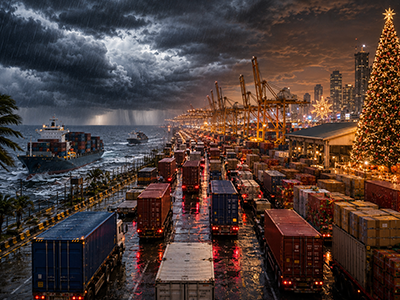
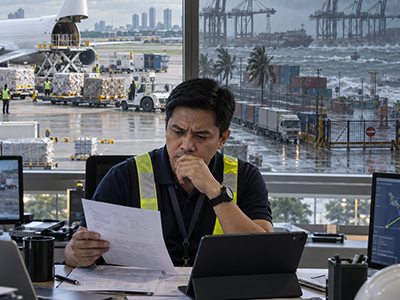
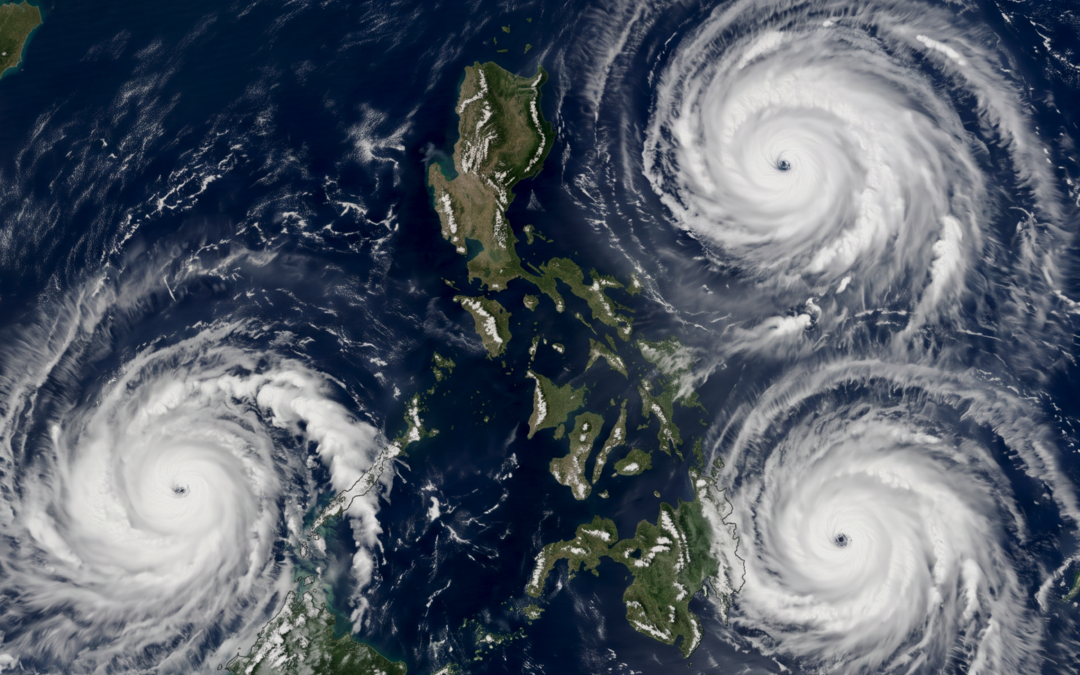
When a super typhoon suspends port operations, grounds flights, and floods key trucking corridors at the same time, the framework itself has broken down. There’s no “next sailing” to rebook on. There’s no alternate route that hasn’t also been affected. Your fallback options depend on contingency agreements you either have or don’t.

Supply chain disruptions in 2026 are increasingly driven by climate events, not just operational ones. In July 2026 alone, Typhoon Bavi generated a backlog of nearly two million TEU in container capacity across North Asia, with some vessels waiting over a week just to berth after ports reopened. That kind of event doesn’t resolve in a day because port backlogs from a major typhoon can take two to three weeks to clear. 

For Philippine businesses, disruptions also arrive through routes that have nothing to do with local weather — geopolitical events affecting international shipping lanes, sudden tariff changes that force sourcing decisions to shift, or a critical carrier suspending operations on a key route. According to the Prologis 2026 Supply Chain Outlook Report, economic volatility, trade barriers, and geopolitical instability rank as the top three disruption concerns for logistics leaders this year. 

A disruption asks a harder question than a delay does: not “how do we rebook?” but “does our contingency plan actually work?”
On The Dot Logistics - Philippines

Why the Confusion Is Costly

When businesses treat every delay like a disruption, they overreact, spending on emergency air freight for shipments that just needed a two-day extension. When they treat every disruption like a delay, they underreact, waiting for a port to reopen when they should already be rerouting.

Both mistakes are expensive. And in the Philippines, where supply chains move across multiple islands, through concentrated port infrastructure, and through one of the world’s most active typhoon belts, the cost of misreading a situation compounds faster than in simpler markets.

The key question to ask when something goes wrong is: Is the system still working, or has the system itself failed?

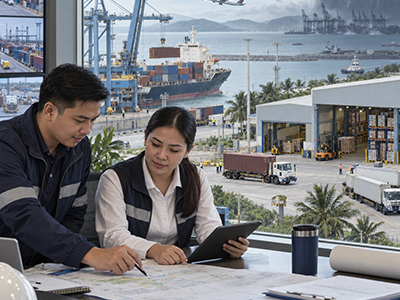
If it’s the former, manage the delay. Rebook, adjust, communicate. If it’s the latter, activate the contingency. Alternative ports, backup carriers, modal shifts, pre-positioned inventory.
On The Dot Logistics - Philippines

What Good Contingency Planning Looks Like

A disruption doesn’t become a crisis if the response was already planned. Here’s what that looks like in practice:

  • Alternative routing – Know which ports can substitute for your primary entry point before you need them. For Manila-dependent cargo, Batangas or Subic are options. For Mindanao-bound freight, Cagayan de Oro and General Santos have different exposure to typhoon paths than Davao.
  • Carrier backup agreements – A single carrier relationship is a single point of failure. During a disruption, everyone needs space at the same time. Pre-agreed backup carrier slots — even on a standby basis — give you options that aren’t available on the spot market.
  • Modal shift triggers – Know in advance at what point it makes business sense to shift from ocean to air. For high-value or time-critical cargo, this threshold should be defined before typhoon season, not during it.
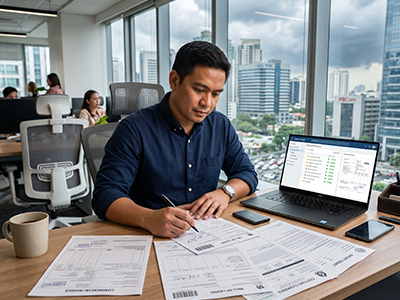
  • Clean documentation, always – During a disruption, customs queues get longer and recovery windows get shorter. A documentation error that costs two days in normal conditions can cost five during a port backlog. Keeping your paperwork accurate and complete is a resilience strategy, not just a compliance one.
  • Inventory closer to demand – For businesses serving markets outside Metro Manila, regional stock positioning means a disruption at your primary port doesn’t immediately become a stockout at your customer’s location.

The Bottom Line

Delays are normal. Disruptions in the Philippines are becoming more intense, even if not more frequent, as El Niño conditions push individual storms to higher intensity levels this season.

The businesses that handle both well are the ones that know which situation they’re in — and have a plan for each.

OTD helps Philippine businesses build logistics frameworks that account for both: reliable day-to-day operations and contingency plans that hold up when the system itself is under pressure. Talk to us about your supply chain setup →
STORIES FROM THE INDUSTRY

Customs Clearance in the Philippines: A Business Owner’s Guide | OTD Logistics

What do Philippine SMEs actually need to know about customs clearance? From required documents to BOC lane classifications, here’s a plain-language guide to importing and exporting without the costly surprises.

The ‘Hidden Freight Fees’ Checklist: 5 Line Items Your Freight Quote Didn’t Warn You About

Your freight quote and your invoice don’t always match. Here are 5 hidden line items – accessorials, fuel surcharges, demurrage, and more – that catch shippers off guard, and how to avoid them.

Building a Typhoon-Ready Supply Chain in the Philippines

Typhoons in the Philippines can be a hassle on logistics. This guide covers inventory, alternative routing, backup plans, and documentation, so your supply chain survives the next one.

Building a Typhoon-Ready Supply Chain in the Philippines

Building a Typhoon-Ready Supply Chain in the Philippines

Building a Typhoon-Ready Supply Chain in the Philippines

Ports close. Vessels cancel sailings. Trucks can’t move. And the businesses that come out of typhoon season without major losses are the ones that didn’t wait for a weather alert to start planning.

Here’s what ops managers and supply chain decision-makers need to do before the storm hits.

Why 2026 Demands a Different Approach

This year, the risk profile has shifted.

PAGASA forecasts 9 to 13 typhoons entering the Philippine Area of Responsibility between June and November. The catch: fewer storms are expected toward the end of the year, but the ones that do arrive are likely to reach typhoon or super typhoon intensity. 

The reason is El Niño. PAGASA puts the probability of a very strong El Niño at 81% between October and January 2027. During El Niño, storm formation slows down, but warmer ocean temperatures fuel stronger individual storms.

One super typhoon during Q4 can disrupt more than several ordinary storms spread across a season. Plan for intensity, not just frequency.

On The Dot Logistics

1. Move Inventory Before You Need To

The most effective thing an ops manager can do right now is get stock closer to where it’s needed—before typhoon season peaks.

When a major port suspends operations, the delay doesn’t stop at one day. In the Philippines, a single day of port closure typically leads to three or more days of delay in sea freight and RoRo deliveries once operations resume. For cargo moving to Visayas or Mindanao, that delay compounds across every inter-island leg.

Pre-positioning inventory at regional hubs in July and August, before storms and Q4 freight demand collide, costs less than emergency rerouting in October.

On The Dot Logistics

2. Map Your Backup Routes Now

Typhoons don’t shut down the entire country at once. While one port is closed, another may still be running. While one highway is flooded, an inland road may still be passable.

The problem is that most businesses only discover their backup options after their primary route fails.

Map these out now:

  • Which ports can substitute for your primary entry point
  • Which trucking corridors hold up during heavy rain in your region
  • Which inter-island routes cover your key provincial destinations
  • At what point it makes sense to shift from ocean to air freight

That last point matters especially in 2026. Pre-agreeing air freight trigger conditions and rates with your logistics provider before typhoon season means you’re not negotiating from a desperate position when you actually need to switch.

On The Dot Logistics

3. Have More Than One Carrier

A single carrier is a single point of failure. If your primary shipping line suspends sailings, your options narrow fast. Narrow options mean higher spot rates and longer wait times.

Before typhoon season peaks, confirm with your logistics partner:

  • Which alternative carriers cover your routes
  • What the process is when a primary vessel or flight is cancelled
  • Whether backup RoRo space is pre-arranged for inter-island shipments

The answers tell you whether your partner is actually set up to protect you during a disruption, or whether you’ll be figuring it out together in real time.

On The Dot Logistics

4. Clean Up Your Documentation Before Storm Season

A missing permit or a mismatched invoice is a minor inconvenience in February. During a typhoon recovery period, it becomes a multi-day hold. Port queues are backed up, customs teams are overwhelmed, and there’s no buffer left in the schedule.

Run through this before typhoon season peaks:

  • Are commercial invoices, packing lists, and bills of lading accurate and consistent?
  • Are permits and clearances in place for regulated cargo (FDA, BPI, and others)?
  • Are HS codes correctly classified?
  • Are digital copies of all documents accessible if your office is affected?

Clean documentation doesn’t prevent typhoons. But it removes one of the most common reasons cargo sits at port longer than it needs to during recovery.

On The Dot Logistics

5. Know Your Financial Exposure Before a Storm Is Named

Typhoon disruptions are expensive in ways that don’t always show up immediately: emergency rerouting costs, demurrage on containers that couldn’t be moved in time, premium rates during the recovery rush, and extended storage fees while ports clear their backlog.

Review two things now:

  • Your cargo insurance coverage and what weather-related disruptions are actually included
  • Force majeure clauses in your supplier and carrier contracts, specifically what triggers them and what they cover

The businesses that recover fastest from typhoon disruptions aren’t the largest ones. They’re the ones that already understood their financial exposure and had a plan before the storm was named.

The Bottom Line

A typhoon-ready supply chain in the Philippines isn’t built during a weather bulletin. It’s built in the months before typhoon season peaks.

Pre-position your inventory. Map your backup routes. Confirm your carrier alternatives. Get your documentation clean. Know your financial exposure.

OTD helps Philippine businesses plan and move freight through typhoon season — across air, ocean, and inter-island routes — with 14 years of routing knowledge and established carrier relationships nationwide. 

Talk to us about your typhoon season plan →

STORIES FROM THE INDUSTRY

The Logistics Manager’s Guide to Q4 Peak Season: How to Secure Fleet Capacity Before Prices Spike

Q4 is the most expensive time to book freight in the Philippines, and the most disruptive. This guide for logistics managers covers when to book, what drives rate spikes, and how to protect your supply chain before peak season hits.

What Actually Causes Shipment Delays in the Philippines (And How to Prevent Them)

Port congestion, customs documentation errors, typhoons, inter-island routing–shipment delays in the Philippines have specific causes. We break it down and share tips to prevent them.

The Difference Between a Delay and a Supply Chain Disruption in the Philippines

A delayed shipment and a disrupted supply chain are not the same problem. This guide helps Philippine businesses tell the difference, respond correctly, and build operations that hold up under both.

The Logistics Manager’s Guide to Q4 Peak Season: How to Secure Fleet Capacity Before Prices Spike

The Logistics Manager’s Guide to Q4 Peak Season: How to Secure Fleet Capacity Before Prices Spike

The Logistics Manager’s Guide to Q4 Peak Season: How to Secure Fleet Capacity Before Prices Spike

Every year, Q4 catches the same businesses off guard. During this period. rates spike, vessel space fills up fast, and trucks are harder to book. Logistics managers who waited too long are left negotiating from a weak position and paying premium spot rates for capacity they could have locked in weeks earlier.

This is your guide to getting ahead of it.

On The Dot Logistics

Why Q4 Is Different in the Philippines

Q4 peak season freight pressure is a global phenomenon, but in the Philippines, it arrives with local complications that make it harder to absorb.

Q4 2025 saw disruptions from back-to-back typhoons, exacerbated by infrastructure challenges and increased logistics costs. Logistics providers scrambled to reposition freight capacity and reroute trucks and RoRo shipments. That happened ON TOP OF the standard holiday volume surge. 

The result: two overlapping pressures hitting at the same time. Typhoon season runs through November. Holiday inventory demand peaks from October through December. Port congestion is particularly bad during peak seasons. Ships wait days before unloading and limited port capacity combined with high volumes creates bottlenecks that slow down the entire logistics process. 

For logistics managers, this is the window where being unprepared becomes expensive.

On The Dot Logistics

When Peak Season Actually Starts

Most people think that Q4 peak season freight starts in October. But it doesn’t.

In 2025, peak season started as early as late August and ran through December. For ocean freight, the window typically spans July to October. Last year it kicked off even earlier, as businesses rushed to import ahead of tariff changes.

By the time logistics managers feel the crunch, the best slots are gone. Surcharges get announced weeks before the rush. Booking confirmations slow down. Empty containers get pulled back to Asia, and available space shrinks fast.

The signal isn’t the spike. The signal is what happens before it.

On The Dot Logistics

What Happens to Rates If You Wait

The cost of waiting is specific and measurable.

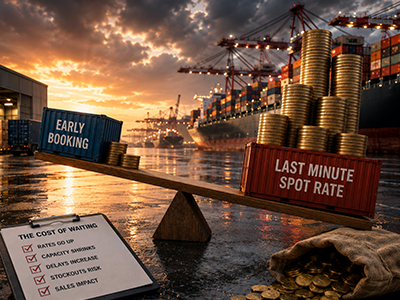
Freight rates rise 20-50% during peak season. Book early and you lock in lower rates. Wait, and that premium compounds fast.

For importers moving high-value goods like electronics, apparel, or home furnishings, a Q4 delay doesn’t just cost money. It means missed product launches and stockouts during the highest-sales window of the year.

The premium paid for a last-minute spot rate almost always dwarfs the cost of planning ahead.

How to Secure Freight Capacity Before the Rush

  1. Book earlier than feels necessary

For ocean freight, secure bookings at least 30-45 days in advance. For air freight, a 2-3 week lead is ideal. Waiting until the last minute increases the likelihood of rollovers, inflated spot rates, and poor transit time reliability. 

For how to secure freight capacity before peak season in the Philippines, the practical window is August to September for Q4 shipments. If that feels early. It isn’t.

  1. Don’t rely on a single carrier or route

Consider multiple carriers or routes so you’re not relying on a single option. During typhoon season, a suspension on one sailing can affect your entire Q4 schedule if you have no alternative lined up. Having options is not just a cost strategy, it’s protection against disruption.

  1. Build buffer days into your transit plan

If you normally expect two weeks, plan for three once November arrives. This is especially true for inter-island legs. A shipment that clears Manila on time can still miss its regional destination if the RoRo connection wasn’t given enough lead time.

  1. Position inventory closer to demand

Typhoon Tino and Super Typhoon Uwan in Q4 2025 proved that lean inventory models are risky in a geographically fragmented country. Many companies ran out of stock not because supply was unavailable, but because inventory wasn’t close enough to the market during disruptions. Forward stocking is now a resilience strategy rather than a backup plan. 

For businesses serving Visayas and Mindanao, this means treating regional warehousing as part of your Q4 freight plan—not a separate decision made after shipments are already moving.

  1. Get your documentation ready before cargo does

Peak season amplifies every documentation gap. A missing permit or misfiled entry that would cause a two-day delay in February causes a five-day delay in November, because port yards are full, customs queues are longer, and recovery windows are shorter. Audit your import documentation requirements before your Q4 shipments move, not during.

The Businesses That Get Through Q4 Without Chaos

They’re not the ones with the biggest budgets. They’re the ones who treated Q4 peak season freight planning as a mid-year strategy, not a year-end scramble.

OTD works with Philippine businesses across FMCG, manufacturing, pharmaceuticals, and retail to plan freight capacity ahead of peak season, covering ocean and air bookings, inter-island coordination, and customs clearance so nothing stalls at the worst possible time.

Talk to OTD about your Q4 freight plan →

STORIES FROM THE INDUSTRY

Customs Clearance in the Philippines: A Business Owner’s Guide | OTD Logistics

What do Philippine SMEs actually need to know about customs clearance? From required documents to BOC lane classifications, here’s a plain-language guide to importing and exporting without the costly surprises.

What Actually Causes Shipment Delays in the Philippines (And How to Prevent Them)

Port congestion, customs documentation errors, typhoons, inter-island routing–shipment delays in the Philippines have specific causes. We break it down and share tips to prevent them.

Building a Typhoon-Ready Supply Chain in the Philippines

Typhoons in the Philippines can be a hassle on logistics. This guide covers inventory, alternative routing, backup plans, and documentation, so your supply chain survives the next one.

Inter-Island Shipping in the Philippines: A Guide for Businesses Outside Metro Manila

Inter-Island Shipping in the Philippines: A Guide for Businesses Outside Metro Manila

Inter-Island Shipping in the Philippines: A Guide for Businesses Outside Metro Manila

If your business operates or ships outside Metro Manila, you already know the logistical reality: getting cargo from one island to another is a different problem entirely from moving it within a single city or province.

Inter-island shipping in the Philippines is not a simplified version of standard freight. It has its own rules, its own costs, and its own failure points. This guide walks through how it works, what to plan for, and how to ship goods outside Metro Manila without the usual surprises.

On The Dot Logistics

What Inter-Island Shipping Actually Involves

Inter-island freight in the Philippines refers to the domestic movement of goods between islands within Philippine territorial waters. Only Philippine-registered vessels can operate on these routes, a rule called cabotage, which means foreign carriers cannot service domestic lanes. 

There are two main service types:

  • Liner service – vessels operate on fixed routes and schedules, with freight costs calculated per ton. This is the most practical option for most businesses. It is predictable, frequent, and suited for rolling cargo, containers, and regular shipments. 
  • Tramp service – the entire vessel is chartered, with flexible routing and scheduling. Costs cover charter fees, fuel, loading, and unloading. Best for large, one-off shipments with specific requirements. 

For most SMEs, liner service is the default, and for most routes, RoRo (Roll-on/Roll-off) is the dominant mode. RoRo allows trucks and vehicles to drive directly onto the vessel, eliminating crane handling, reducing port time, and lowering overall cost compared to traditional container loading.

On The Dot Logistics

The Main Routes

Inter-island freight in the Philippines moves across three main corridors:

  • Luzon to Visayas – originating from Port of Manila or Port of Batangas, connecting to major Visayas ports like Cebu, Cagayan, and Masbate
  • Visayas to Mindanao – Cebu is the central hub, with frequent routes to Cagayan de Oro, Iligan, Davao, and surrounding areas
  • Mindanao and Visayas inter-island – connecting regional ports within each island group, often via feeder vessels for more remote destinations

Every leg adds time. A shipment from Manila to a provincial destination in Mindanao passes through at least two of these corridors, and each one is a potential delay point if not planned as part of the full transit.

On The Dot Logistics

What Affects Your Cost and Timeline

Several factors work together to shape what you actually pay, and how long it actually takes.

Volume and cargo type. LCL (Less-than-Container Load) lets you pay only for the space your cargo occupies, sharing the container with other shipments. FCL (Full Container Load) becomes more cost-efficient once your volume justifies it. Oversized cargo — heavy equipment, bulk materials, rolling stock — is best suited to RoRo.

Route availability and vessel schedules. Not all destinations have daily departures. Secondary ports may have 2 to 3 sailings per week, which means your booking window and free time before departure directly affect your overall transit.

Seasonal disruptions. Typhoon season (June to November) is the most significant risk factor for inter-island shipping in the Philippines. Vessels suspend sailings during weather warnings, gate operations at ports slow down, and rescheduling is not always immediate. Build buffer days into your timeline during this period.

Peak season capacity. RoRo vessels have limited space. High-demand periods, like Q4, pre-holiday shipping, and agricultural harvest cycles, reduce available slots. Businesses that book early secure better rates and schedule reliability.

On The Dot Logistics

What Businesses Outside Metro Manila Need to Plan For

Treat the inter-island leg as part of the total shipment, not an afterthought.

The most common mistake is booking international freight or origin-side cargo without confirming the domestic leg. A shipment that clears Manila customs on time can still arrive late at a Mindanao or Visayas destination if the inter-island connection wasn’t pre-arranged.

Confirm the full route before booking. Know which port your cargo clears through, which vessel service covers your destination, and what the inter-island transit time adds to your total delivery window. For some provincial destinations, feeder vessel connections add 1 to 3 extra days beyond the main route transit.

RoRo expands your reach affordably. A Philippine Institute for Development Studies (PIDS) study noted that RoRo improvements reduced travel time between Luzon and Mindanao by 12 hours and lowered costs by 30%, with agricultural households near ports seeing around a 7% increase in income. For businesses in the regions, this mode is not just cost-efficient, it’s the primary reason inter-island distribution is viable at the scale most SMEs need.

Document requirements still apply. Even for domestic inter-island cargo, certain products like food, pharmaceuticals, chemicals, and agricultural goods, require permits and clearances before loading. Missing documentation at the port of origin is one of the fastest ways to miss a vessel departure.

On The Dot Logistics

Choosing the Right Logistics Partner

How to ship goods outside Metro Manila reliably comes down to who manages the end-to-end route for you.

A strong inter-island freight partner does more than book vessel space. They confirm route availability, monitor vessel schedules, manage documentation, coordinate port-side handling, and have contingencies ready when a sailing is disrupted. 

Ask specifically:

  • Do they service your destination port directly, or through a feeder connection?
  • Can they provide door-to-port and port-to-door coordination?
  • How do they handle delays during typhoon season?
  • What’s their documentation process for regulated cargo?

OTD manages inter-island shipping in the Philippines as part of end-to-end freight forwarding — from international clearance through Manila to final delivery outside Metro Manila. Talk to us about your route →

STORIES FROM THE INDUSTRY

Cold Chain Logistics Philippines: Food and Pharma Guide | OTD Logistics

Temperature-sensitive cargo needs more than just refrigeration. This guide for Philippine food and pharma businesses covers what cold chain logistics actually requires, where it breaks down, and how to get it right.

Building a Typhoon-Ready Supply Chain in the Philippines

Typhoons in the Philippines can be a hassle on logistics. This guide covers inventory, alternative routing, backup plans, and documentation, so your supply chain survives the next one.

The ‘Hidden Freight Fees’ Checklist: 5 Line Items Your Freight Quote Didn’t Warn You About

Your freight quote and your invoice don’t always match. Here are 5 hidden line items – accessorials, fuel surcharges, demurrage, and more – that catch shippers off guard, and how to avoid them.

The ‘Hidden Freight Fees’ Checklist: 5 Line Items Your Freight Quote Didn’t Warn You About

The ‘Hidden Freight Fees’ Checklist: 5 Line Items Your Freight Quote Didn’t Warn You About

The ‘Hidden Freight Fees’ Checklist: 5 Line Items Your Freight Quote Didn’t Warn You About

Your freight quote looked fine. Then the final invoice landed…and it didn’t match.

This happens more than most shippers realize. Research shows that 20-30% of invoices contain discrepancies — hidden freight fees that never made it into the original quote. They’re not always errors. Some are standard fees that just weren’t mentioned upfront.

Here are 5 freight quote charges to watch for, and how to keep them off your next invoice.

On The Dot Logistics

1. Accessorial Fees

These are the small “extra service” charges like inside delivery, after-hours pickup, liftgate use, reconsignment. Detention, reconsignment, inside delivery, and after-hours delivery charges frequently slip through with little oversight. 

Individually, they look minor. Add them up across a year of shipments, and they’re some of the most common hidden freight fees shippers report.

Watch out for: Quotes that don’t list accessorials by name. If your forwarder says “standard delivery,” ask what’s not included.

On The Dot Logistics

2. Fuel Surcharge Adjustments

Fuel surcharges move with oil prices, but they don’t always move down when fuel does. Carriers often adjust fuel surcharges with little visibility, leading to discrepancies that are rarely challenged. 

This is one of the most common gaps between quoted and billed cost, and one of the least questioned.

Watch out for: A surcharge that stayed flat for months despite fuel price drops. That’s worth asking about.

On The Dot Logistics

3. Demurrage and Detention Charges

This is the big one for ocean freight. When the free time granted by the shipping line runs out, demurrage and detention fees start accumulating daily – and can even surpass the actual freight charges.

In the Philippines, this risk is higher than most shippers expect, often as a freight quote charge in the Philippines that isn’t built into the original number. Port handling fees alone can run from PHP 3,000 to PHP 15,000 – and many forwarders quote shipping terms that leave you responsible for these charges separately, once cargo arrives.

Watch out for: Quotes that don’t state your free time window in days. No stated free time means no way to plan around it.

On The Dot Logistics

4. Dimensional Weight Reclassification

Your quote may be based on actual weight. Your invoice might be based on dimensional weight, which is a volume-based calculation that can push your cost higher even though nothing about the shipment changed. Misclassifications or incorrect dimensional calculations can inflate shipping costs significantly. 

Watch out for: A final invoice with a higher “chargeable weight” than your actual cargo weight. Ask which method was used to calculate it.

On The Dot Logistics

5. Duplicate or Misapplied Rate Charges

This one is purely administrative, but it still costs you. Duplicate charges and misapplied rates are particularly problematic for companies with complex supply chains and high shipment volumes. 

It happens more often than it should, especially across multi-leg shipments with several handoffs.

Watch out for: Two line items that look like they’re charging for the same service, just worded differently.

How to Protect Your Shipment Before It Moves

You can’t audit your way out of a bad quote after the fact. The real fix happens before booking.

  • Ask for an itemized quote, not a lump sum
  • Confirm your free time window in writing
  • Ask which weight method (actual or dimensional) applies
  • Request a list of accessorials that could apply to your specific shipment
  • Compare quote line items against the final invoice, every time

A freight quote should tell you what you’re actually going to pay – not leave room for hidden freight fees to show up later. If it doesn’t, that’s the question to ask before you book.

OTD Logistics Philippines builds transparent freight quotes with every line item accounted for upfront. Get a clear quote before your next shipment →

STORIES FROM THE INDUSTRY

The ‘Hidden Freight Fees’ Checklist: 5 Line Items Your Freight Quote Didn’t Warn You About

Your freight quote and your invoice don’t always match. Here are 5 hidden line items – accessorials, fuel surcharges, demurrage, and more – that catch shippers off guard, and how to avoid them.

Why Shipping Costs Fluctuate (And How Businesses Can Stay in Control)

Learn why shipping costs fluctuate and discover practical shipping cost management and freight cost control strategies for your business.

Cold Chain Logistics Philippines: Food and Pharma Guide | OTD Logistics

Temperature-sensitive cargo needs more than just refrigeration. This guide for Philippine food and pharma businesses covers what cold chain logistics actually requires, where it breaks down, and how to get it right.